
more hair in the plughole
Hair thinning
Shedding is losing more hair than usual, while thinning is the hair that remains becoming finer or sparser. They have different causes and different treatments, and blood tests are recommended first, as deficiencies are common and can often be corrected.
Clinically reviewed by Dr Munroe, September 2026

what it is.
Everyone sheds some hair each day. Shedding becomes a concern when it increases noticeably, with more hair in the brush, the shower or on the pillow. Thinning shows as a widening parting, a sparser crown or a receding hairline, and as hair that has become finer. Patches of complete hair loss are a different condition again.
what causes it.
A physical or emotional stressor, such as childbirth, illness, surgery, severe stress or a sudden change in diet, can move many hairs into the resting phase at once, and they are shed two to three months later (telogen effluvium). Low iron stores, vitamin D, B12 or zinc, and thyroid problems can cause or prolong shedding. Hereditary thinning (androgenetic hair loss) follows a recognisable pattern and progresses gradually. Tight hairstyles, some medications, autoimmune conditions and scarring conditions of the scalp are less common causes.
who gets it.
Shedding after childbirth is very common. Women often notice thinning around the menopause, while men tend to notice hereditary hair loss earlier. Heavy periods, a restrictive diet or a recent illness can increase the risk of deficiency.
the options.
Including the ones not offered here at Dr Munroe Clinic.
Blood tests and correcting deficiency
Ferritin, vitamin D, thyroid function, B12 and zinc can be checked through your GP or through the clinic, and correcting a deficiency is sometimes the treatment.
Scalp treatments
Polynucleotides (Plinest Hair) and exosomes (Purasomes) following microneedling aim to support the follicle environment. Offered at Dr Munroe Clinic.
Medication
Some medication options are prescription-only and can be discussed at consultation or with your GP.
Further assessment
Patchy hair loss, a sore or scaly scalp, or scarring may need further assessment before treatment is considered, and we can refer you onwards where appropriate.
Hair transplant
May suit established hereditary hair loss. Not offered at Dr Munroe Clinic.
Time
Shedding after a one-off trigger will often improve on its own over several months.
what Dr Munroe recommends.
Blood tests come first. If the results are normal and the pattern is hereditary, or the shedding has not settled, a course of scalp treatment alongside homecare is often recommended, with progress reviewed over the following months.
common questions.
Is shedding after pregnancy permanent?
Usually not. Shedding after childbirth tends to peak a few months after the birth and often settles over the following months, although low iron can prolong it. Blood tests are worth considering if it has not settled.
Which blood tests are recommended?
Ferritin, vitamin D, thyroid function, B12 and zinc. These can be arranged through your GP or through the clinic, and the results are reviewed with you.
How long before scalp treatment makes a difference?
Hair growth is slow. A minimum of around three months is usually needed before improvement becomes noticeable, and most people notice less shedding first, followed by finer regrowth.
the next step.
Every plan starts with a consultation: a review of your skin and what you'd like to change, and an honest account of which of these options applies to you.
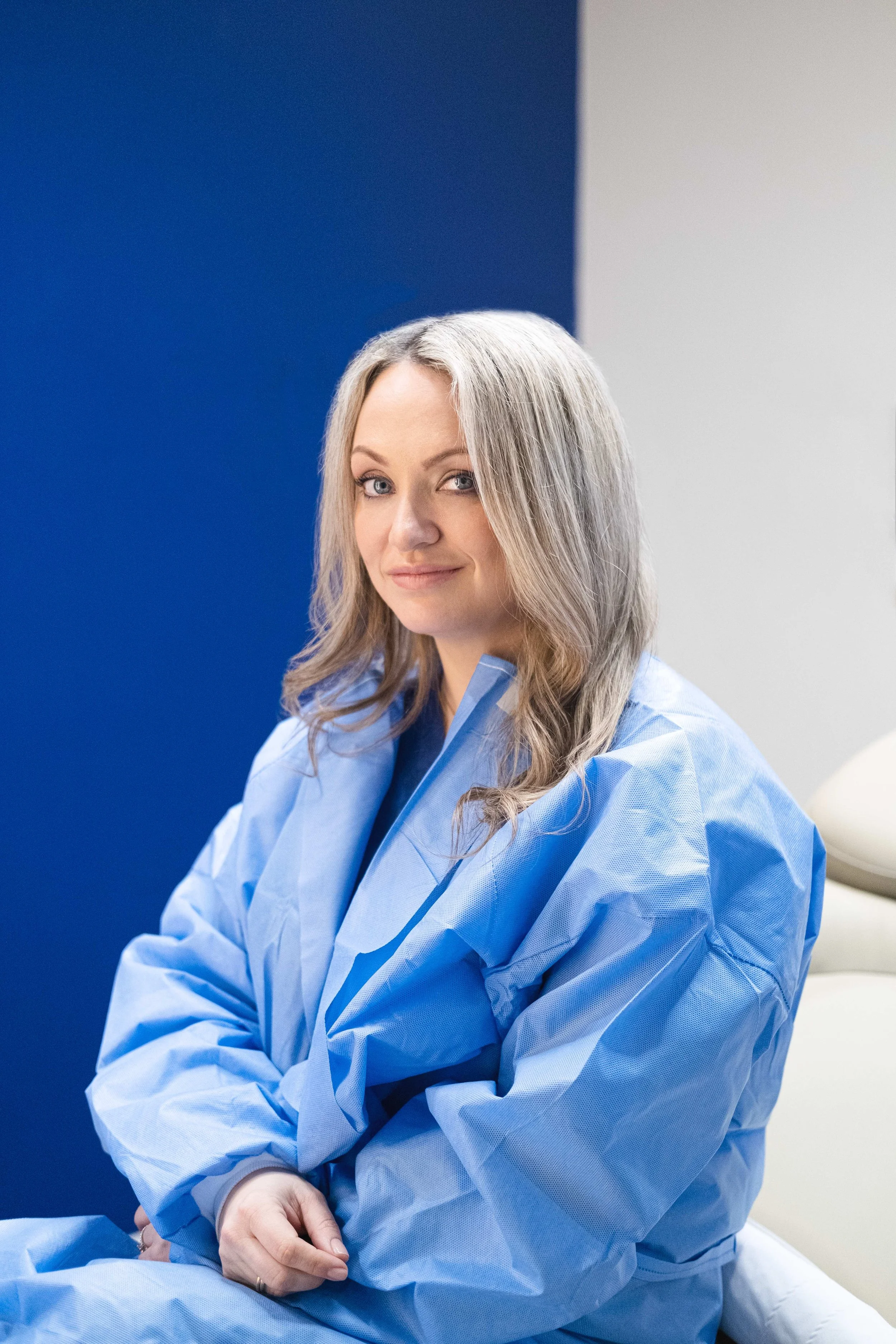
Clinically reviewed by Dr Tiffany Munroe, MBBS MRCS, GMC 7293952.
Last reviewed . Next review .
About Dr Munroe